



- EAER>
- Journal Archive>
- Contents>
- articleView
Contents
Citation
| No | Title |
|---|
Article View
East Asian Economic Review Vol. 23, No. 3, 2019. pp. 261-284.
DOI https://dx.doi.org/10.11644/KIEP.EAER.2019.23.3.363
Number of citation : 0View
101
Download
107



International Outsourcing, Unemployment and Welfare: A Re-Examination
|
|
Lamar University |
|---|---|
|
|
Chu Hai College of Higher Education |


Abstract
This paper explores the ramifications of international outsourcing on unemployment, income distribution and welfare, which is an important but yet unresolved issue. Using the well-known Harris-Todaro (1970) model of sector-specific unemployment, it shows that the effects of outsourcing on employment, income-distribution and welfare depend on the sector in which the outsourcing occurs, whereby sectoral factor intensities, unemployment-outsourcing response and the dynamic stability condition play crucial roles. In particular, outsourcing in the manufacturing (primary) sector widens (narrows) income inequality by increasing (decreasing) the sectoral wage gap and raising (not affecting) the rental income of the capital owners in the economy. Moreover, outsourcing in the manufacturing (primary) sector can be welfare-decreasing (is always welfare-increasing) due to its negative (positive) employment effect mitigating (reinforcing) the primary gains from the outsourcing.
JEL Classification: F11, F29, F60
Keywords
Outsourcing, Factor-Augmenting Effect, Unemployment, Dynamic Stability, Immiserizing Growth
I. INTRODUCTION
Over the last several decades, amid the increasing trend of trade liberalization, international outsourcing has surfaced as a prevalent way of doing trade among nations. Known also as “offshoring” or “fragmentation, it is now usual that firms in one country outsource intermediate and/or finished goods or services from other firms in foreign countries so as to lower production costs and increase productivity. For example, client firms in developed countries in the North [i.e. the United States (US) and European Union (EU)], while maintaining management base and conducting research and development (R&D) at home, shift their manufacturing activities to developing countries in the South where labor costs are lower (e.g., China, India, Malaysia, Philippines, Thailand, and Vietnam) and/or buy a substantial amount of parts or services from local firms there.
Consequently, the rapidly increasing trend of outsourcing in world trade has inspired a spate of intellectual contributions to the literature from economists in the fields of international trade and economic development (i.e., Chao and Yu, 1993; Bhagwati, Panagariya and Srinivasan, 2004; Kohler, 2004; Long, 2005; Jones, 2005).1 Among the rich and still growing body of literature studying various aspects of international outsourcing are two notable works evaluating outsourcing in the Neoclassical Heckscher-Ohlin (HO henceforth) general equilibrium framework: one by Bhagwati, Panagariya and Srinivasan, (2004, BPS henceforth) and the other by Batra and Beladi (2010, BB henceforth). In the former work, BPS (2004) argued that with outsourcing trade opportunity increases resulting in gain similar to that of information technology that converts the hitherto non-tradable service into a Mode 1 service. This is analytically the equivalent of growth. Further, BPS (2004) deliberated over the effects of outsourcing on the terms of trade and the welfare with reference to the conventional growth theorems based on the HO model. Later, BB (2010), inspired by Mankiw’s argument for offshoring expressed in the context of the 2004 Report of the President,2 explored several major properties of international trade (most importantly the welfare effect) by incorporating a factor-augmenting feature of outsourcing into the general equilibrium HO model.3
We note that while attention on international outsourcing has been largely placed on that from North to South, a firm’s decision to outsourcing can actually be driven by a variety of factors including but not limited to lower labor costs in the South. Those factors can also include capital, technology and organizational competency; together they enhance the overall operational capability and profitability of the firm’s production. To illustrate, the US and EU countries outsource products from each other. China outsources a variety of intermediate goods (such as crude petroleum, integrated circuit and iron ore) from Australia, Germany, Hong Kong, Japan, and South Korea among others, while itself shifting outsourcing goods (of garments, apparels, toys, foot wares, and tools) to other developing countries in Asia, Latin America, and Africa.
These actual patterns of outsourcing over the recent years reveal several important facts: First, outsourcing can occur universally among countries whereby it can be of any direction, namely, from North to South, from North to North, from South to North, and from South to South. Second, each time goods and services are imported, the importing country has possibly outsourced a portion of economic activity from abroad – that is, all trades are likely to involve some outsourcing of intermediate inputs. Third, for the trading countries and the world, free trade with outsourcing is always superior, or at least equivalent, to free trade without outsourcing because outsourcing denotes a state of free trade coupled with partial factor migration among nations.4 Fourth, as in the case of free trade, although a nation as a whole gains from outsourcing, not all of its agents gain from it – that is, some agents gain while others lose. The question of outsourcing versus insourcing (protection) is still a lively subject of debates among the economists and policy makers.
The purpose of this paper is to investigate the ramifications of international outsourcing for unemployment, income distribution and welfare in a small country using the well-known Harris-Todaro (1970, HT, henceforth) model of sector-specific unemployment. There are several motivations behind this investigation: First, despite the presence of a prolific literature on outsourcing, studies using the general equilibrium approach are scanty and most of them assume full employment of labor. Hence there is no explicit view regarding the employment effects of outsoucing, with only three recent exceptions of the work by Keuschnigg and Ribi (2009), Yabuuchi (2011), and Zhang (2011). Keuschnigg and Ribi (2009) investigate the consequences of outsourcing of labor-intensive activities upon low-wage economies and derive the welfare optimal redistribution and unemployment insurance policies. This study is essentially confined to the typical North to South outsourcing. Yabuuchi (2011) examined the effects of outsourcing on unemployment and income distribution for an outsourcing country in the HT (1970) model of unemployment. However, Yabuuchi’s work (2011), based on BB’s (2010) factor-augmenting mechanism of outsourcing in the HO model, appears mis-interpreting Mankiw et al.’s (2004) argument for the gains generated by outsourcing. To be specific, while Mankiw et al. (2004) implies that gains from outsourcing are derived from the discrepancy by which the marginal revenue product of the outsourced goods and services (i.e., outsourced factors, henceforth) exceeds the price (or the marginal cost) of the outsourced factors, Yabuuchi (2011) attributes the welfare-increasing effect of outsourcing to the decreasing foreign price of the outsourced factors (without considering the marginal revenue product side of the outsourced factors) as if welfare gain cannot exist if the foreign prices of the outsourced factors are not falling. The results in Yabuuchi (2011) cannot reflect the real-world phenomenon of the dramatic growth in international outsourcing in recent decades with the precipitous increases in the international prices of outsourced factors (possibly caused by the rising resource prices and environmental costs in the South, notably in China).5 Concomitantly, Zhang (2011) explores the impact of international outsourcing on unemployment and social welfare by incorporating both distortions of a minimum-wage constraint into the conventional trade model. The scale economies, however, are linked with the production of the most skill-intensive good whereas the minimum wage prevails in the unskilled labor market. Therefore, even though outsourcing could raise aggregate employment, but it may further exacerbate the resource misallocation; Noting that the HT (1970) model was first introduced to explain the rural-urban (geographical) migration and urban unemployment problems of the developing countries in the Sub-Saharan African region, the model’s applicability later turns out to be much broader than that the model was originally designed for. To be specific, regardless of the stage of economic development and the type of the sectoral migration, the HT model seems to be applicable to any country with unemployment and sectoral migration issues caused by institutional factors (such as labor unions, minimum wage and sectoral wage differentials). This is why the HT model is often regarded as the most successful general equilibrium model next to the standard HO Model, and hence, it is enlightening to deliberate outsourcing issue in the context of the HT model; Lastly, since full-employment implies no unemployment, the HO model can be analytically regarded as a special case of the HT model where unemployment and wage differentials do not exist ? thus it is imperative to study outsourcing issue in the general case of the HT model.
We obtain several important results from the analyses. Unlike the common view that outsourcing gives rise to negative (positive) effect to the domestic employment and income-distribution (country’s welfare), its effects on those crucial variables depend on the sector in which outsourcing occurs, whereby sectoral factor abundance, outsourcing-unemployment response and the dynamic stability condition play crucial roles. In particular, outsourcing in the manufacturing (primary) sector widens (reduces) income inequality by increasing (decreasing) the sectoral wage gap and raising (not affecting) the rental income of the capital owners in the economy. Moreover, outsourcing in the manufacturing (primary) sector can be welfare-decreasing (is always welfare-increasing) due to its negative (positive) employment effect mitigating (reinforcing) the primary gains from the outsourcing. Noting that international outsourcing serves as a key force for production fragmentation and global value chain formation for various interest groups involving in trade, our results should have strong implications for the current de-globalization and the US-Sino trade disputes.
1)Other recent studies on outsourcing include
2)See
3)Worthwhile to note that (i) the
4)
5)To be specific,
II. THE MODEL AND ITS ASSUMPTIONS
Consider an economy with two sectors: a traditional sector (Sector 1) producing a primary-good in the amount of

where
Differentiating (1) yields

where
Perfect capital mobility results in identical rental rates, equal to the values of marginal product of capital, in each sector:

where  is the derivative of
  this implies
  6
6
We further postulate  additional outsourcing lowers the firm’s unit cost only when
  and hence
  the firms would not undertake an additional outsourcing (
The wage rates between the two sectors are usually unequal in the HT economy, and labor allocation are determined also by marginal product pricing,

Applying the now well-known HT hypothesis of labor movement, labor migrates from the primary sector (sector 1) to the manufacturing sector (sector 2) until the actual wage of the former sector equals the expected wage of the latter sector, which is the institutionally-set minimum wage  times the probability of finding a job there. Let

The employment condition in factor markets can be written as


where
The demand side of the model is given by the social utility function (

where

where  denotes the excess demand in sector 2.
This completes the specification of our model allowing for the presence of unemployment in an outsourcing economy. The model is now utilized to study the implications of international outsourcing occurring in either the manufacturing or the primary-good sector (primary sector, henceforth) of the outsourcing country.
6)Law of increasing opportunity costs states that once all factors of production are used with maximum efficiency, additional output will cost more than the average. As production increases, the opportunity cost does as well. In light of the general law of increasing opportunity cost, we postulate that
III. OUTSOURCING IN MANUFACTURING SECTOR
Suppose that an autonomous outsourcing takes place by the firms in the manufacturing sector (sector 2) only, i.e.,



The above three equations consist of 3 endogenous variables (

The determinant of the coefficient matrix in (13) is

because  due to diminishing marginal returns.
1. Sectoral Employment (Unemployment), Factor Prices and Output
The effect of an exogenous change in good price at constant level of outsourcing, and of outsourcing in the manufacturing sector at constant good prices can now be determined.
By using Cremer’s rule, (13) can be solved for



Holding good prices constant (



It is clear that an increase in the relative price of the manufacturing good and an increase in outsourcing in the manufacturing sector have similar effects on sectoral factor intensities and unemployed-employed ratio of the manufacturing sector. That is, an increase in
The labor allocation effect of a change in the good price or the level of outsourcing can now be obtained. Differentiating (6) and (7) with respect to


Differentiating (6) and (7) with respect to


Noteworthy is that the signs of (21) - (24) depends on the sign of the denominator,
Later, McCool (1982) noted that Neary’s dynamic stability condition,
Similarly, as will be shown next, the effect of a change in
Now, we can determine the effect of a change in


Similarly, differentiating (1) with respect to A holding p constant and utilizing (18), (19), (23) and (24), we derive


Equations (25) - (26) show that the sectoral output will respond positively to a change in its relative price in a dynamically stable system, i.e.,
We now turn our attention to the effect of outsourcing on income distribution and employment (or unemployment), which is a major subject matter for the present paper.7 First, we examine the effect of outsourcing in manufacturing on factor prices (i.e., wage rate in the primary sector and economy’s rental rate). Differentiating (3) and (4) with respect to

Since  while increasing the rental income of the capital owners. Next, to analyze the outsourcing effect on unemployment in the manufacturing sector, we differentiate

which is necessarily positive in light of
Therefore, we can state the following proposition.
An intuitive explanation of Proposition 1 is as follow:
As is well known, for a general equilibrium system to be stable, resources must flow from the higher productivity sector to the lower sector to maintain efficiency. Noting that outsourcing increases the productivity of the outsourcing sector, the output effects of outsourcing should be ultra-biased such that it increases the output of the outsourcing sector and decreases that of the other sector. For example, outsourcing in the manufacturing sector increases the output of the manufactured good and decreases the output of the primary goods. As this happens, resources (i.e., labor and capital) should shift from the primary sector (sector 1) to manufacturing sector (sector 2). However, HT model assumes
2. Welfare Effect
We now analyze the welfare effect of outsourcing occurring in the manufacturing sector. Since the international commodity markets is assumed to be competitive, the terms of trade (

which, using (2) - (7), can be rewritten as

Equation (31) shows that the welfare effect of outsourcing in the manufacturing sector consists of three component effects:  the marginal cost of outsourced factors, and -
 In the HO model of full-employment where unemployment is nil (
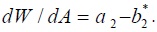 Therefore, additional outsourcing by the private firms (which occurs when
  is always welfare-increasing for the outsourcing country (i.e.,
 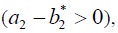 the outsourcing in the manufacturing sector should be welfare-decreasing (i.e., immiserizing) for the outsourcing country. To examine the condition for this perverse welfare result, we rewrite (31) using (20) as

Therefore,  That is, the outsourcing country becomes worse-off if the outsourcing occurs in the manufacturing sector and the value of the marginal product of the outsourced factors (
This implies that in the presence of unemployment, there exists an optimum level of outsourcing that maximizes the social welfare. Since the social welfare is maximized when

Here, equation (33) represents the necessary condition for the optimal level of outsourcing for the outsourcing country, and it can occur only when there exists a continuous outsourcing range (
The optimum outsourcing in the manufacturing sector is graphically explained in Figure 1. In equation (1), we assume that the productions functions of the outsourcing firms are linearly homogeneous, and outsourcing ( is a positive constant with respect to
  is up-sloping and above the supply curve of
  without considering the outsourcing-induced employment effect [-
 and the outsourcing-induced unemployment cost [
 are outweighed by the negative employment effect induced by the outsourcing, and hence, an optimum outsourcing exists.
Thus far, we assume the general case where the outsourcing markets are imperfectly competitive. Now, we briefly turn our attention to the special case of perfectly competitive outsourcing market. For the purpose, we continue to assume that outsourcing occurs in the manufacturing sector. In this case, the supply of the outsourced factors are perfectly elastic at the fixed market price ( Then, both the demand (
Now, before discussing outsourcing in the primary sector, it should be worthwhile to compare our present welfare result of outsourcing with the Beladi and Naqvi’s result (1988) that economic growth (either from factor growth and technological progress) cannot be immiserizing in the HT model of unemployment. The BN (1988) case of autonomous growth and the present case of outsourcing differ in that the BN case involves no payments for the growth while the present case of outsourcing involves payments for it (i.e., outsourcing). Noting that the BN (1988) case can be regarded as a special case where the payment for the growth is nil, it is a simple matter to verify the BN result by setting the cost of outsourcing or growth  equal to zero in the present outsourcing model.10
7)For example, the importance of outsourcing for employment (though not unemployment) and income distribution is well explained in
8)A large country in the international commodity market can affect the terms of trade (
9)Using the same methodology, we can consider outsourcing in the special case of primary sector under perfectly competitive outsourcing market. We skip presenting detailed analysis. However, we intuitively deduce that either complete specialization in the primary good or a state of free trade with no outsourcing ensues. Further, there will neither be an interior solution for the market equilibrium level of outsourcing nor a socially optimum level of outsourcing because additional outsourcing always increases the welfare.
10)The BN (1988) case of autonomous growth is relegated to this note because it is not a main subject of outsourcing.  the welfare effect in (32) reduces to
IV. OUTSOURCING IN PRIMARY SECTOR
Suppose now outsourcing occurs at the primary sector (sector 1) instead of the manufacturing sector, so that



Totally differentiating (34)- (36) and expressing in matrix firm, we obtain

The determinant of the coefficient matrix of (37) is

Since the rest of the analyses involve essentially the same procedure as the previous section, we relegate the main results to the Appendix and summarize our major findings here:
(1) Regardless of the stability of the system,
(a) outsourcing in the primary sector raises (does not affect) the capital-labor ratio of the primary (manufacturing) sector, and reduces the unemployed - employed ratio (
(b) outsourcing in the primary sector increases the wage rate in the sector, but has no effect on the economy’s rental rate. Therefore, the income inequality resulting from the sectoral wage gap (
(2) Under a dynamically stable system [k 2 - (1+λ )k 1 > 0],
(a) the effects of outsourcing in the primary sector is ultra-biased on sectoral employment and outputs (i.e., it increases employment and output of the primary sector and decrease those of the other sector). This result breaks down in an unstable system [where
(b) unlike outsourcing in manufacturing, outsourcing in the primary sector always improves the welfare of the outsourcing country because its primary outsourcing gain 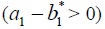 is reinforced by the employment gain from the decrease in the unemployed-employed ratio in the manufacturing sector. Therefore, optimum outsourcing does not exist for this case of outsourcing.

V. CONCLUSIONS
This paper has examined the effects of international outsourcing on unemployment, income distribution and welfare. Using the Harris-Todaro (1970) model of unemployment, it shows that the effects of outsourcing on employment, income-distribution, and welfare depend on the sector in which the outsourcing occurs, whereby sectoral factor intensities, unemployment-outsourcing response and the dynamic stability condition play crucial roles. In particular, outsourcing in the manufacturing (primary) sector widens (reduces) income inequality by increasing (decreasing) the sectoral wage gap and raising (not affecting) the rental income of the capital owners in the economy. Moreover, outsourcing in the manufacturing (primary) sector can be welfare-decreasing (is always welfare- increasing) due to its negative (positive) employment effect mitigating (reinforcing) the primary gains from the outsourcing, so, an optimum outsourcing exists (does not exist) for the case.
This appendix presents the results obtained from comparative static analyses on outsourcing occurring in the primary sector (i.e., traditional sector) only.

Tables & Figures
Figure 1.
Optimum Outsourcing in Manufacturing Sector

References
- Antras, P. 2019. Global Value Chain: The Economics of Spiders and Snakes. IEFS-EAER Conference Proceedings. vol. 4, pp. 30-57.
-
Batra, R. and H. Beladi. 2010. “Outsourcing and the Heckscher-Ohlin Model,”
Review of International Economics , vol. 18, no. 2, pp. 277-288.
-
Beladi, H. and N. Naqvi. 1988. “Urban Unemployment and Non-Immiserizing Growth,”
Journal of Development Economics , vol. 28, no. 3, pp. 365 - 376.
-
Bhagwati, J., Panagariya, A. and T. N. Srinivasan. 2004. “The Muddles Over Outsourcing,”
Journal of Economic Perspectives , vol. 18, no. 4, pp. 93-114.
-
Chao, C.-C. and E. S. H. Yu. 1993. “Content Protection, Urban Unemployment and Welfare,”
Canadian Journal of Economics , vol. 26, no. 2, pp. 481-492.
-
Choi, J.-Y. and H. Beladi. 2014. “Internal and External Gains from International Outsourcing,”
Journal of International Trade and Economic Development , vol. 23, no. 2, pp. 299-314.
-
Choi, J.-Y. and E. S. H. Yu. 1985. “Technical Progress, Terms of Trade and Welfare under Variable Returns to Scale,”
Economica , vol. 52, no. 207, pp. 365-377.
-
Choi, J.-Y. and E. S. H. Yu. 1992. Technical Progress, Terms of Trade and Welfare in a Mobile Capital Harris-Todaro Model. In Neuefeind, W. and R. Riezman. (eds.)
Economic Theory and International Trade: Essays in Memoriam of J. Trout Radar . New York: Springer Verlag. Chapter 6, pp. 129-142. -
Choi, J.-Y. and E. S. H. Yu. 2017. International Outsourcing, Environment Costs, and Welfare. Asia Pathways. The Blog of Asian Development Bank Institute (ABDI). December. <
https://www.asiapathways-adbi.org/2017/12/internationaloutsourcing-environmental-costs-and-welfare > (accessed July 25, 2019) -
Deardorff, A. 2001. “International Provision of Trade Services, Trade, and Fragmentation,”
Review of International Economics , vol. 9, no. 2, pp. 233-248.
-
Egger, H. and P. Egger. 2003. “Outsourcing and Skill-Specific Employment in a Small Economy, Austria After the Fall of the Iron Curtain,”
Oxford Economic Papers , vol. 55, no. 4, pp. 625-643.
-
Feenstra, R. C. 1998. “Integration and Disintegration of Production in the Global Economy,”
Journal of Economic Perspectives , vol. 12, no. 4, pp. 31-50.
-
Grossman, G. M. and E. Rossi-Hansberg. 2008. “Trading Tasks: A Simple Theory of Offshoring,”
American Economic Review , vol. 98, no. 5, pp. 1978-1997.
-
Harris, J. R. and M. P. Todaro. 1970. “Migration, Unemployment and Development: A Two-Sector Analysis,”
American Economic Review , vol. 60, no. 1, pp. 126-142. -
Hazari, B. R. 1978.
The Pure Theory of International Trade and Distortions . New York: John Wiley & Sons. -
Helpman, E., Melitz, M. J. and S. R. Yeaple. 2004. “Export Versus FDI with Heterogeneous Firms,”
American Economic Review , vol. 94, no. 1, pp. 300-316.
-
Jones, R. W. 2005. “Immigration VS Outsourcing: Effects on Labor Markets,”
International Review of Economics and Finance , vol. 14, no. 2, pp. 105-114.
-
Keuschnigg, C. and E. Ribi. 2009. “Outsourcing, Unemployment and Welfare Policy,”
Journal of International Economics , vol. 78, no. 1, pp. 168-176.
-
Kohler, W. 2004. “International Outsourcing and Factor Prices with Multistage Production,”
Economic Journal , vol. 114, no. 494, pp. c166-c185.
-
Long, N. V. 2005. “Outsourcing and Technology Spillovers,”
International Review of Economics and Finance , vol. 14, no. 3, pp. 297-304.
-
Mankiw, N. G., Romer, D. and D. N. Weil. 2004. A Contributions to the Empirics of Economic Growth. In Acemoglu, D. (ed.)
Recent Developments in Growth Theory (International Library of Critical Writings in Economics) . vol. 1. North Hampton: Edward Elgar Publishing. pp. 163-193. -
Mankiw, N. G. and P. Swagel. 2006. “The Politics and Economics of Offshore Outsourcing,”
Journal of Monetary Economics , vol. 53, no. 5, pp. 1027-1056.
-
McCool, T. 1982. “Wage Subsidies, Distortionary Taxes in a Mobile Capital Harris-Todaro Model,”
Economica , vol. 49, no. 193, pp. 69-79.
-
Neary, J. P. 1981. “On the Harris-Todaro Model with Intersectoral Capital Mobility,”
Economica , vol. 48, no. 191, pp. 219-234.
-
Yabuuchi, S. 2011. “Outsourcing, Income Distribution, and Unemployment,”
Journal of Economic Integration , vol. 26, no. 4, pp. 705-720.
-
Zhang, T. 2011. “International Outsourcing and Unemployment in a Minimum Wage Economy,”
Review of International Economics , vol. 19, no. 4, pp. 776-786.